
In this Spaghetti Squash 101 guide, you'll learn everything you need to know about using spaghetti squash as a gluten-free substitute for pasta. We'll cover how to cook spaghetti squash in the oven, the safest way to cut it and much more. Whether you're cooking for celiac disease, gluten intolerance, or just looking for a healthier pasta swap, this guide has you covered.
Jump To / Aller directement à
Spaghetti squash is one of the most popular gluten-free pasta alternatives-but if you've never cooked it before, it can feel a little intimidating. Is spaghetti squash actually gluten-free? How do you cut it without hurting yourself?
This post is part of my "ingredient complete guides" series. If you like those, you can also read my Complete guide to beetroot or What is Buckwheat Flour or What is Fleur de Sel to find the answers to all your questions about these ingredients.
💭 What is a spaghetti squash
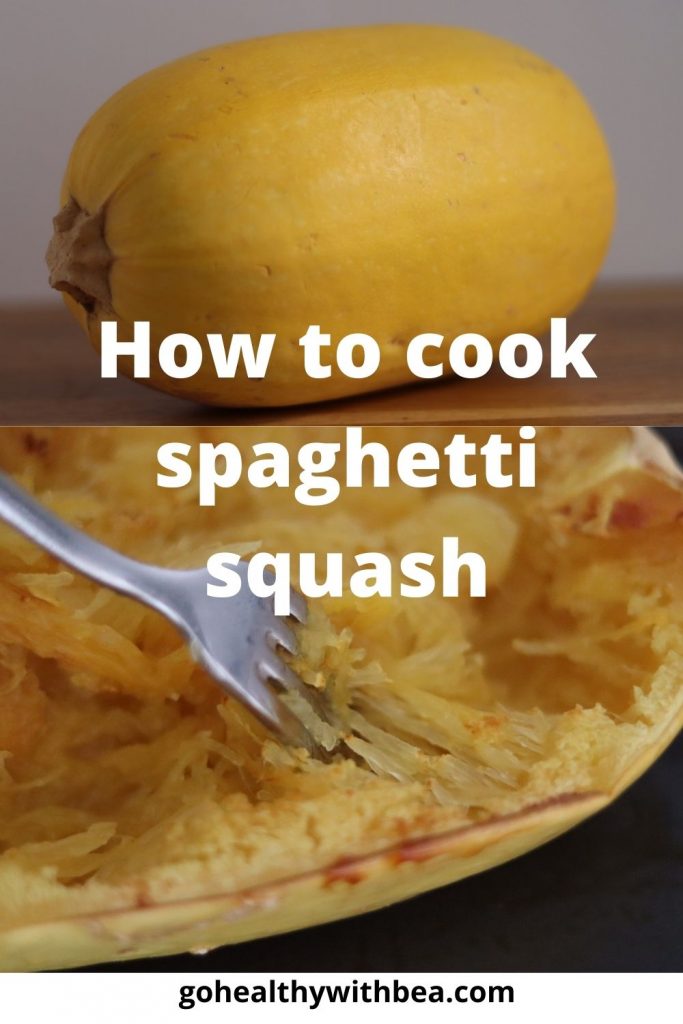
Spaghetti squash is one of the varieties of winter squash. It is delicious, healthy, and easy to cook!
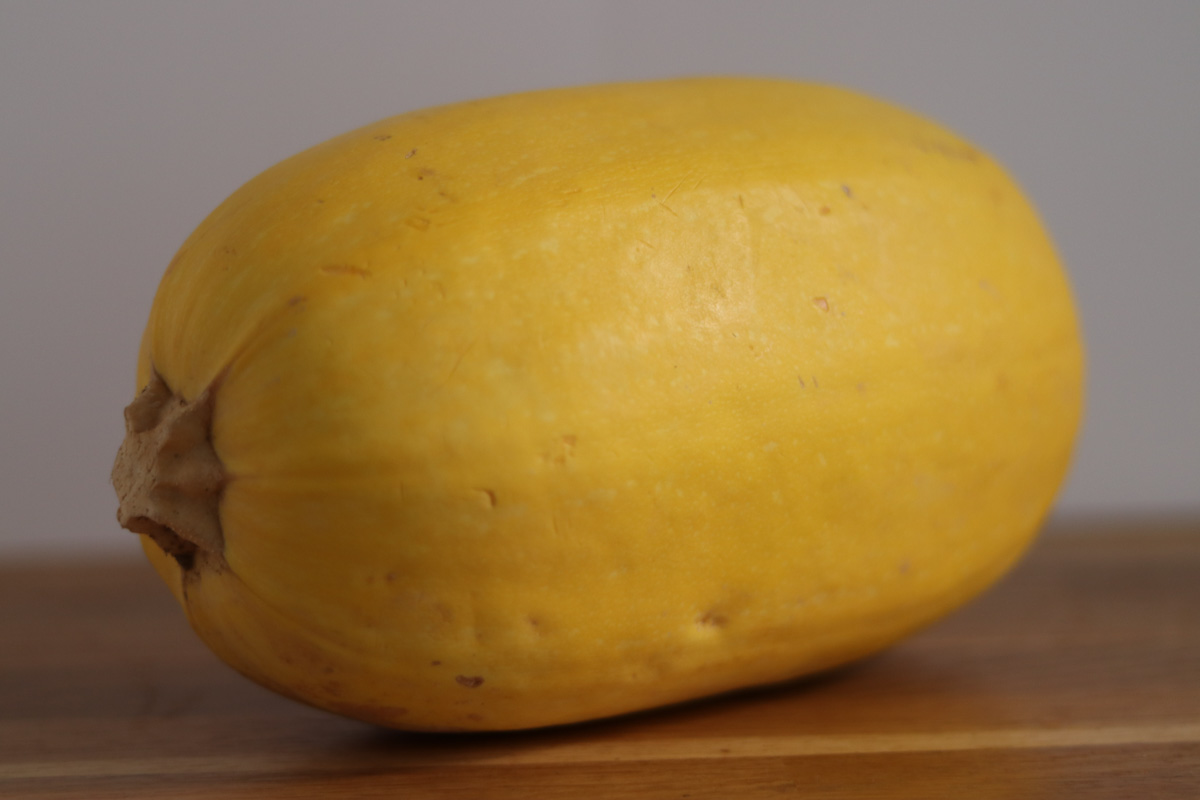
As you can see in the picture above it is a long and large shaped yellow squash, that usually weighs between 2 to 4 pounds. Moreover, you can find it throughout autumn and winter seasons.
📋 Is Spaghetti Squash Gluten-Free?
Yes, spaghetti squash is naturally gluten-free. It's a vegetable, not a grain, and doesn't contain wheat, barley, or rye. This makes it a safe pasta alternative for people with celiac disease or gluten intolerance, as long as it's prepared without cross-contamination.
👩🏻🍳 How to clean spaghetti squash
To clean it, use a soft brush to scrub it under plain cold running water.
🔪 How to cut spaghetti squash safely
Although it looks scary, it's actually pretty easy to cut. I recommend using a large and very sharp knife. Santoku knife is my favorite one. (FYI: Santoku is not a brand but the name of the type of knife).
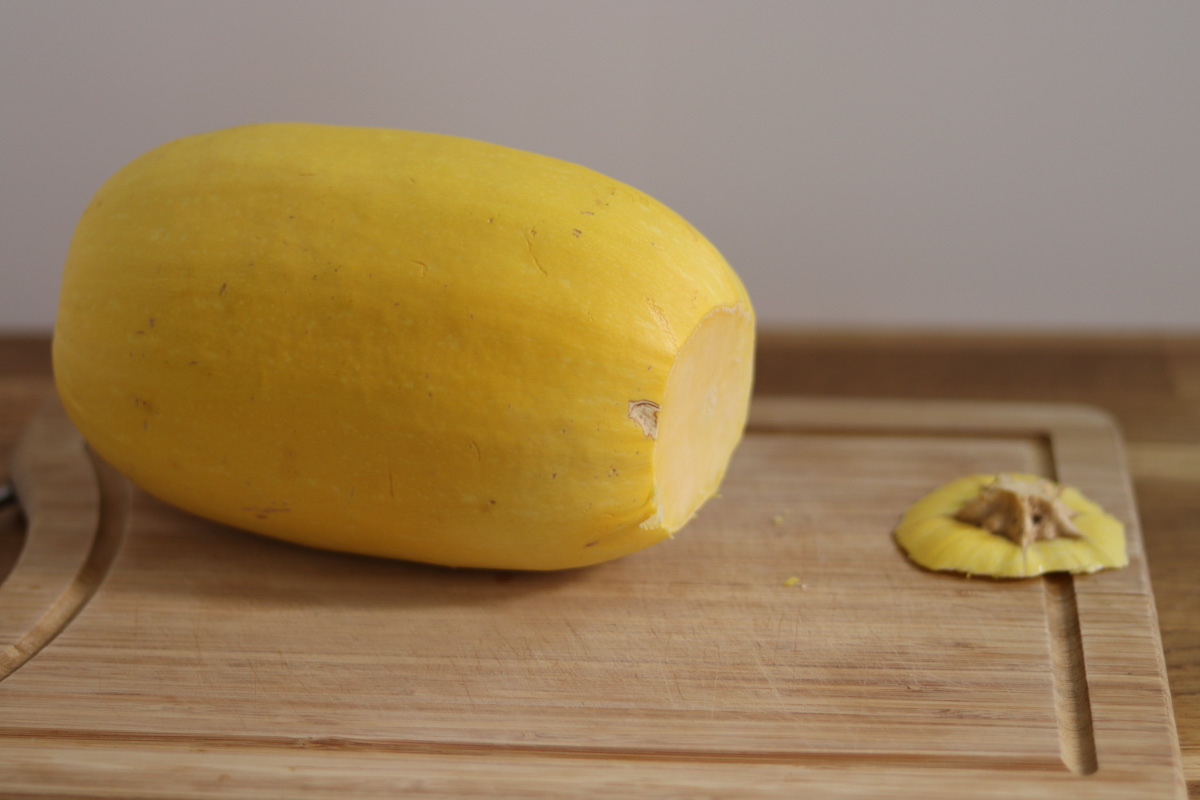
Stand the squash upright on the side you just cut. The cut side is now flat so your squash is stable when it's upright. Then cut it in half, lengthwise. I recommend using both hands to carefully push the knife down the squash.
♨️ How to cook spaghetti squash
Roasting spaghetti squash is my favorite cooking method. This method is, in my opinion, the easiest one and it requires almost no prep time. The benefit of cooking it in the oven is that it gives an incredibly delicious taste with a slight caramel flavor. But the con is that it takes a long time to cook. Well, I don't really care about that, as I can do something else in the meantime. 😉
Preheat oven to 360°F (180°C)
Rinse out the squash under cold water
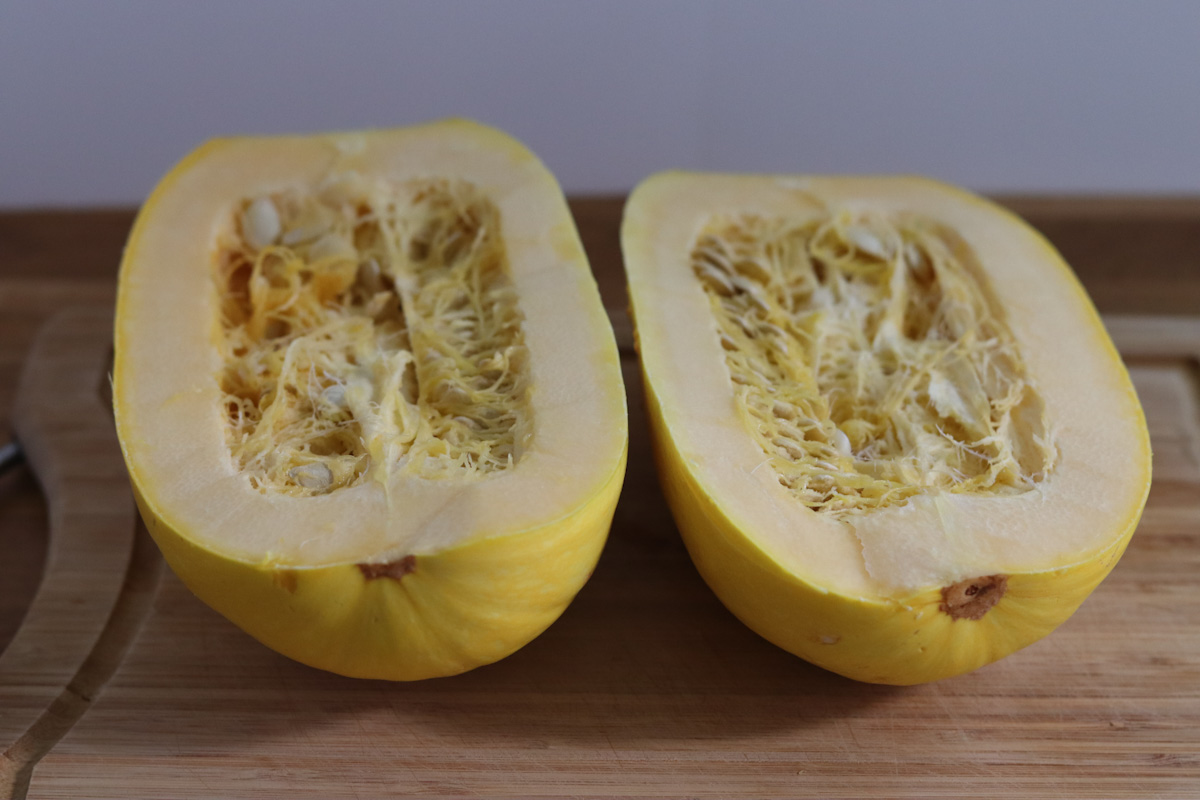
Cut off the top end and cut the squash in two halves.
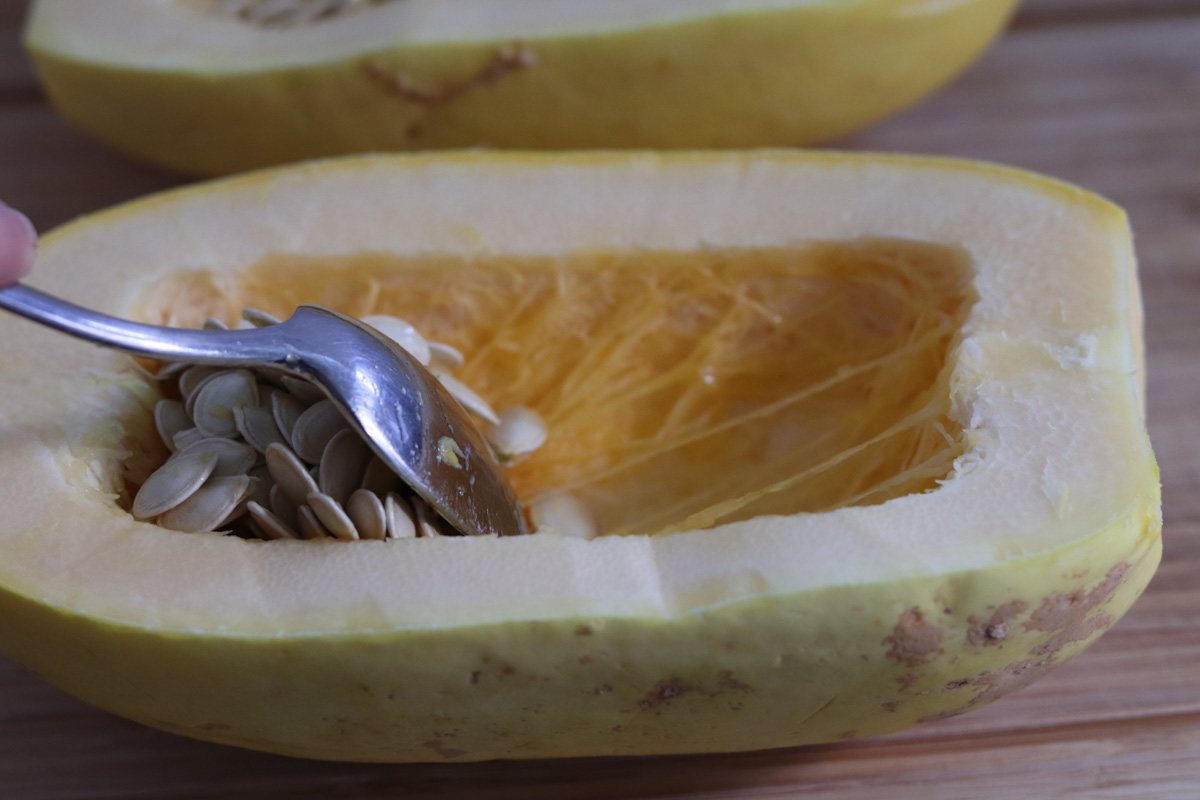
Remove the seeds using a spoon (as shown in the picture below).
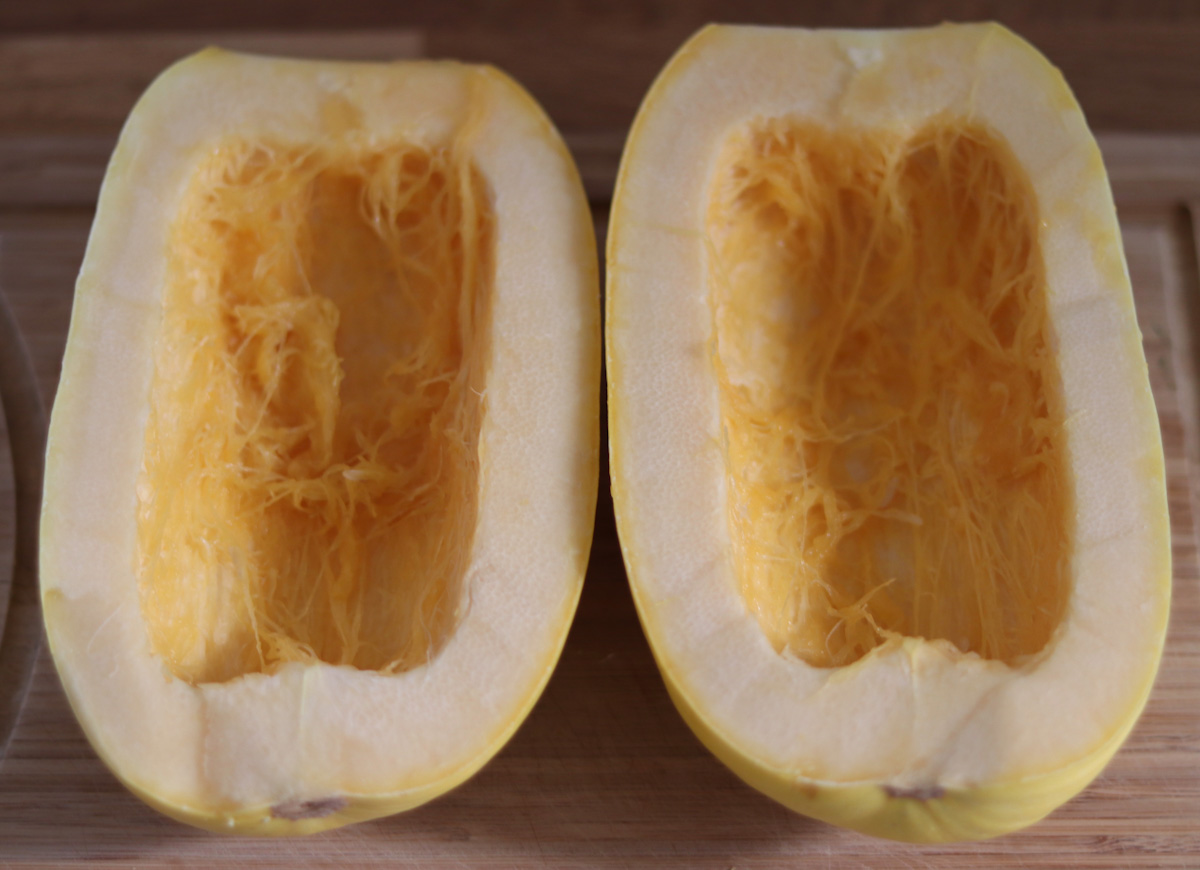
Place the squash halves cut side down on a baking tray.
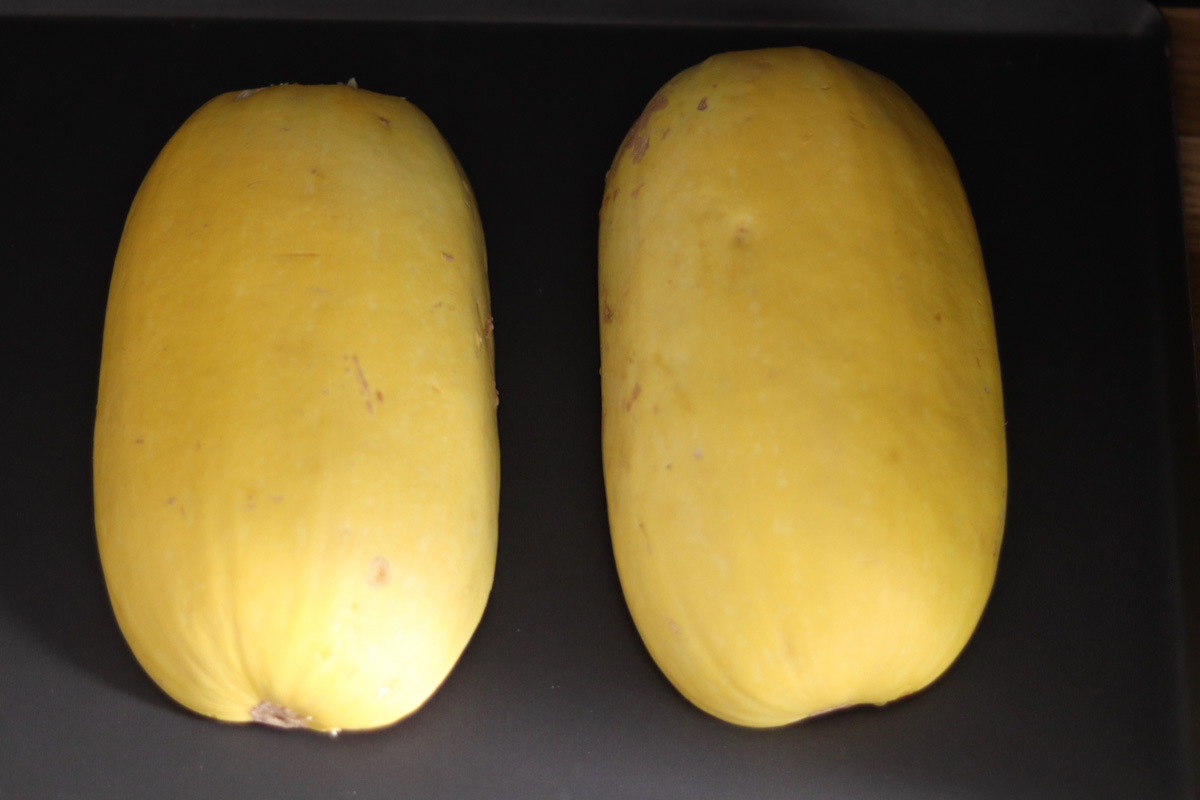
Bake for 40 minutes or until squash is tender. To check if the squash is cooked, prick a knife (or fork) into it through the skin : it should be soft.
💬 FAQ
The inside of a spaghetti squash is made of tiny strands that look like spaghetti. Well it looks like it but, don't get me wrong, it doesn't taste like it. It has a mild, slightly sweet flavor that pairs well with pasta sauces. Its spaghetti-like strands make it a popular gluten-free pasta substitute.
Cooked spaghetti squash will last about 2 to 3 days in an airtight container in the refrigerator. For best texture, I recommend storing it plain, without sauce.
Spaghetti squash is done when the skin is easily pierced with a fork (or a knife) without resistance. If it still feels firm, it needs a few more minutes in the oven.
🍽 How to eat spaghetti squash
Once the squash is cooked, using a fork, scrape the flesh, to reveal the spaghetti texture.
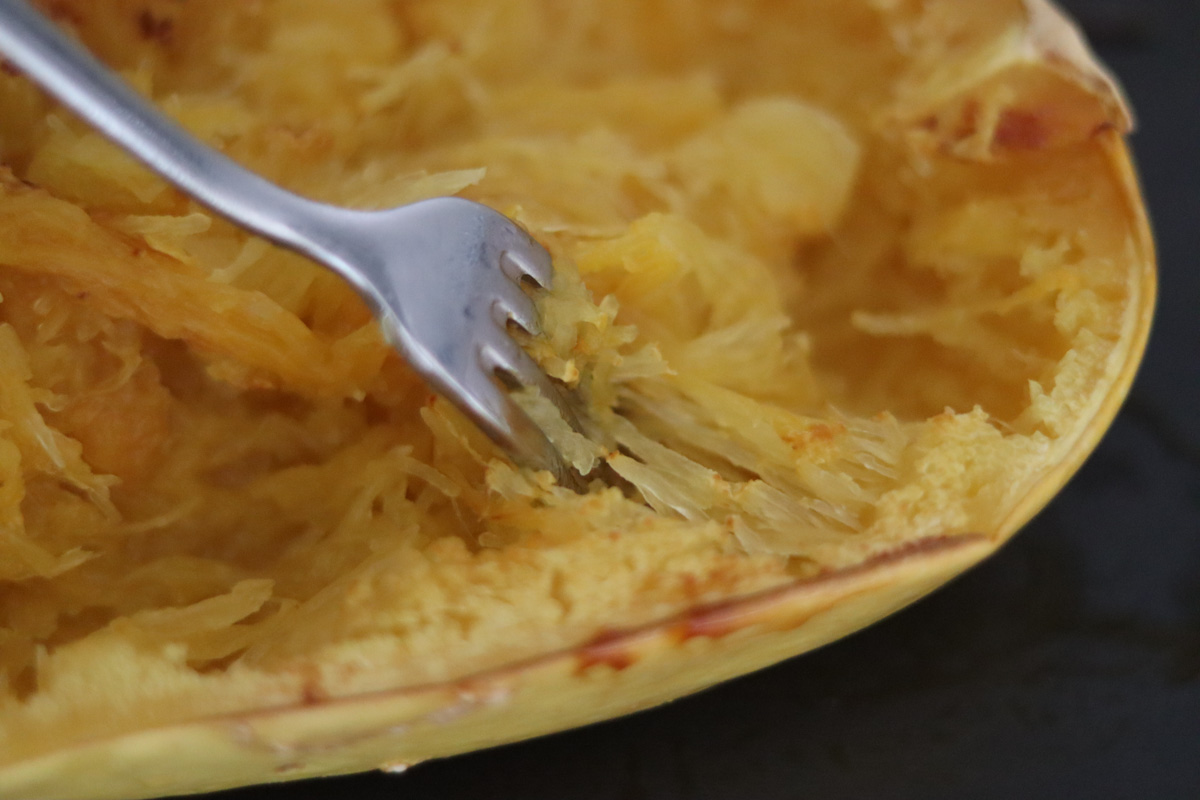
Then, you can eat the squash with a dash of extra virgin olive oil and a little bit of salt as a side dish.
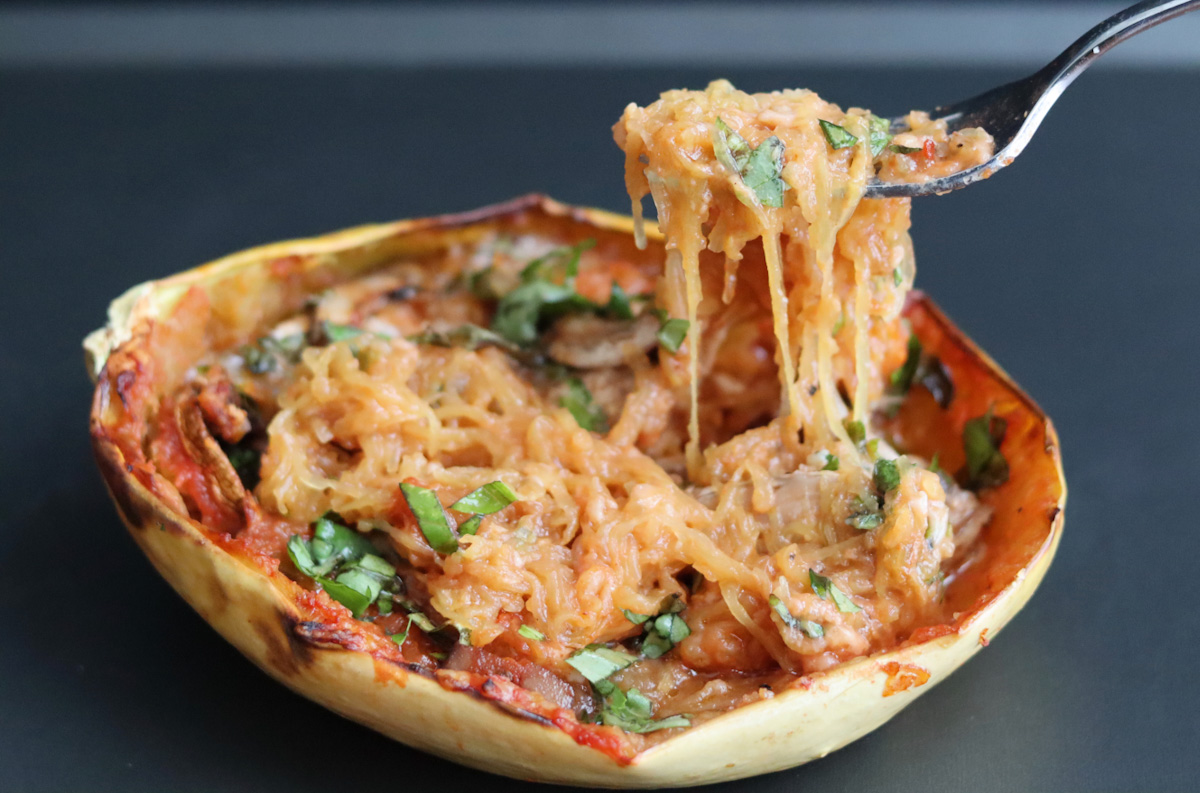
Or you can check out my vegetarian stuffed spaghetti squash recipe : it's delicious and tastes like indulging food when it's, in fact, very healthy.
Did you like this article? Please leave a review below! Also, let's stay connected on social media! You can find me on Instagram, Facebook and Pinterest.


Comments
No Comments